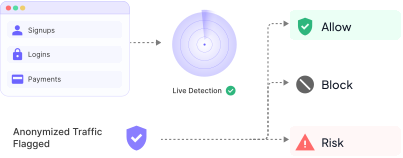

Detect proxy and VPN usage in real time, without relying on static VPN and proxy IP lists. We evaluate each request and return clear signals with confidence scores. Stop fraud and abuse at sign-ups, logins, and payments.
IP Address
xxx.xxx.xxx.xxxVPN and proxy infrastructure changes constantly. IPs rotate frequently, new providers appear daily, and residential networks are increasingly used for anonymization. Static or hourly-updated proxy/VPN IP lists quickly become unreliable. Live detection analyzes the current behavior of a connection, not just its historical reputation. This makes it possible to stop evasion attempts exactly when they occur, before fake accounts are created or fraudulent transactions are completed.
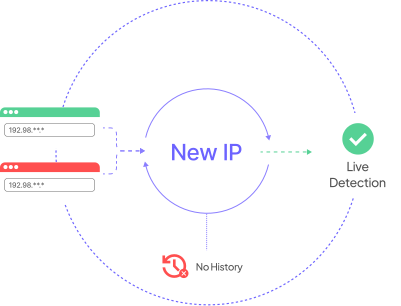
VPN and proxy IPs change rapidly, sometimes within minutes. New or lesser-known providers often operate before they appear in public lists. Live detection identifies anonymized connections immediately, even when the IP has no historical reputation.
A residential IP can look completely normal one moment and then be used as a proxy the next. The same IP address may belong to a real household user, but later it can be routed through a residential proxy network, making anonymous traffic appear legitimate. Real-time detection checks live session signals, so you can flag proxy behavior when it occurs.
IP ownership frequently changes. An IP previously associated with a VPN may later belong to a normal user, which can lead to outdated tags and false positives. Real-time analysis evaluates the current connection itself and reduces unnecessary blocks.
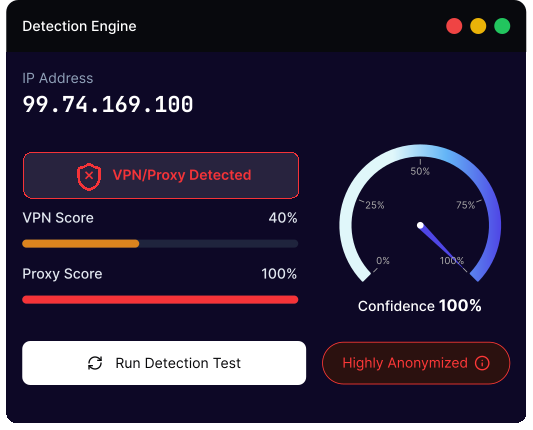
A session came from a normal-looking residential ISP, but live checks showed it was being routed through some anonymous connection. The engine flagged it as a proxy with high confidence.
The IP appeared to belong to a normal residential network. Real-time detection identified active anonymization behavior as the session occurred and flagged the connection as proxy traffic with strong confidence.
Accessed the application through an anonymized tunnel connection. Live detection identified not only the anonymization, but also classified the connection as VPN traffic with high confidence.
This detection system can identify Microsoft Edge VPN sessions in real time with a strong confidence score, even when the connection appears similar to normal consumer traffic.
Strengthen your real-time fraud detection by identifying VPN, proxy, and other anonymous connections as sessions occur. Live VPN detection acts as a high-signal input for fraud prevention systems. It helps you stop abuse before accounts are created or payments are completed.
By evaluating network behavior in real time, you can detect anonymized traffic often used in automated sign-ups, credential abuse, and payment fraud, without relying on outdated IP lists.
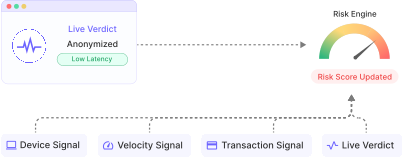
Live VPN detection integrates naturally into real-time fraud detection pipelines as a strong, low-latency signal, especially when combined with behavioral, velocity, and transaction data.
Detect anonymized traffic in real time during sign-ups, logins, and payments, without relying on outdated IP lists.
Use live VPN and proxy signals as a strong, low-latency input for real-time fraud prevention decisions.
Improve accuracy by combining live detection with behavioral signals, velocity checks, and transaction risk scoring data.
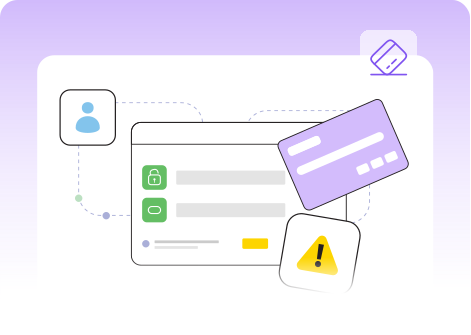
Flag anonymous connections in real-time during sign-ups or payments to stop fraudsters from hiding behind proxies and reduce chargebacks and fake accounts.
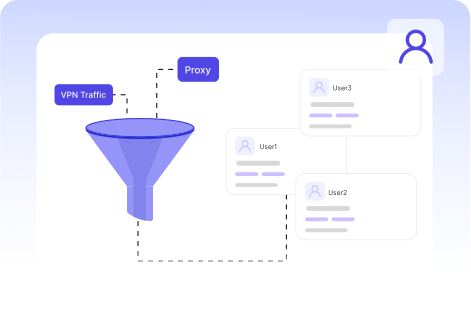
Filter VPN and proxy traffic to reduce invalid clicks and misleading attribution, so your ad budget goes to real users and campaign results stay accurate.
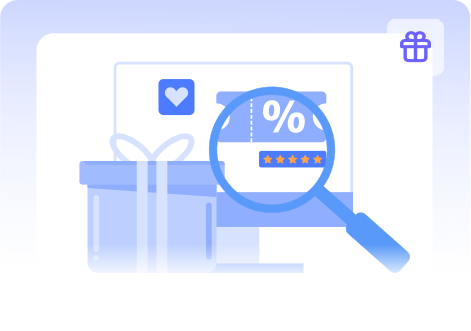
Detect live VPN/proxy use during coupon redemption and referrals, preventing multi-account creation, bonus abuse, and unfair reward harvesting.
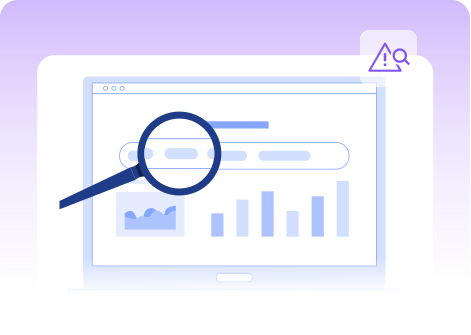
Detect live anonymized connections and trigger session monitoring, stricter limits, or alerts for security teams when behavior indicates fraud or abuse.
Catch users attempting to bypass bans or restrictions using a VPN/proxy in real-time, and enforce device or account-level controls immediately.
Understand why real-time detection offers superior protection against modern anonymization techniques compared to traditional static lists.
Can become outdated quickly as VPN/proxy IPs rotate
Evaluates connections at request time
Often misses new or lesser-known providers until the lists update
Detects anonymization even when the IP has no historical reputation
Typically cannot detect active residential proxy behavior reliably
Detects anonymization even on residential ISPs by evaluating live behavior
Can cause false positives when IP ownership changes
Reduces false blocks by analyzing the current session signals
Depends heavily on list update frequency and coverage
Produces clear signals with confidence scoring for allow/challenge/block decisions
Can become outdated quickly as VPN/proxy IPs rotate
Evaluates connections at request time
Often misses new or lesser-known providers until the lists update
Detects anonymization even when the IP has no historical reputation
Typically cannot detect active residential proxy behavior reliably
Detects anonymization even on residential ISPs by evaluating live behavior
Can cause false positives when IP ownership changes
Reduces false blocks by analyzing the current session signals
Depends heavily on list update frequency and coverage
Produces clear signals with confidence scoring for allow/challenge/block decisions
Unlock the potential of seamless connectivity with our integrations. Discover how our platform effortlessly connects with your favorite tools, third-party platforms, and developer libraries. Simplify your workflow, boost productivity, and open doors to new innovations.
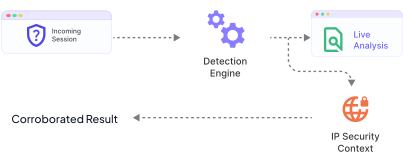
Live VPN/proxy detection checks the connection at the moment of access to identify active anonymization use, instead of relying only on static VPN/proxy IP lists.
No. Live detection provides a decision signal. You choose what to do: allow, challenge (CAPTCHA/MFA), rate-limit, or block, based on your risk tolerance.
A well-optimized lookup is built for real-time use cases like login and checkout. Most teams run it only on high-value actions to keep the user experience fast while still stopping abuse early.
is_anonymous=true means the connection is associated with a VPN or proxy. is_anonymous=false means it is not flagged as VPN/proxy based on the current analysis.
vpn_score estimates how likely the connection is using a VPN, while proxy_score estimates how likely the connection is using a proxy. Both are returned so you can apply different policies for VPN vs proxy traffic.
Run it on high-risk flows such as sign-up, login, password reset, promotion redemption, and payment/checkout. Avoid running it on every page unless you need continuous scoring.
Static lists can be out of date quickly. VPN/proxy endpoints rotate, new VPN/proxy providers appear, and IPs get reassigned, so lists can miss new threats or trigger false positives.
Yes. It can detect residential proxy connections in real-time. The same IP may be used legitimately and then for anonymized access moments later. Live detection evaluates network connection behavior, not just IP reputation, so it can identify both clean and anonymous sessions on the same IP.
Embed a lightweight client-side script in the browser to initiate detection. It triggers server-side network analysis tests and returns the final result in JSON format.
confidence indicates how confident the detection system is in the is_anonymous result. It reflects certainty in the classification outcome, not a guarantee of fraud.
Not always. Many businesses challenge or restrict access instead of blocking, especially when confidence is moderate. Use decision bands to balance security and user experience.
Enrich every request with precise geolocation and real-time threat intelligence, delivered on a global edge with a 99.99% uptime SLA. Start free and scale when you’re ready.
Get the latest in geolocation tech, straight to your inbox.