Browse practical guides with step-by-step explanations, implementation workflows, and deeper how-to content for IP-aware applications.
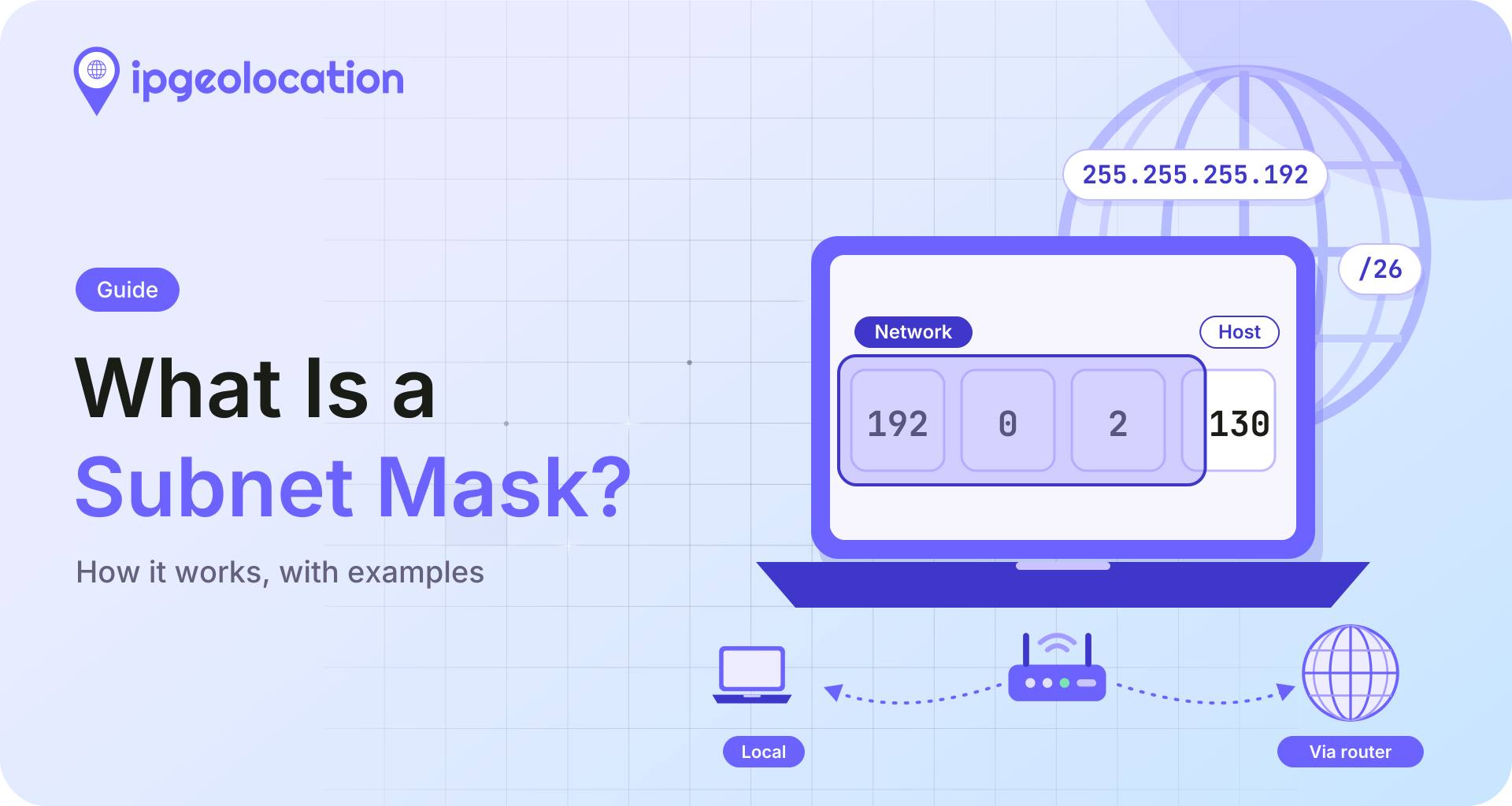
A subnet mask splits an IPv4 address into a network part and a host part, and devices use it to decide what's local. Here's the math, worked examples, every mask from /0 to /32, and what prefix lengths mean in real IP data.
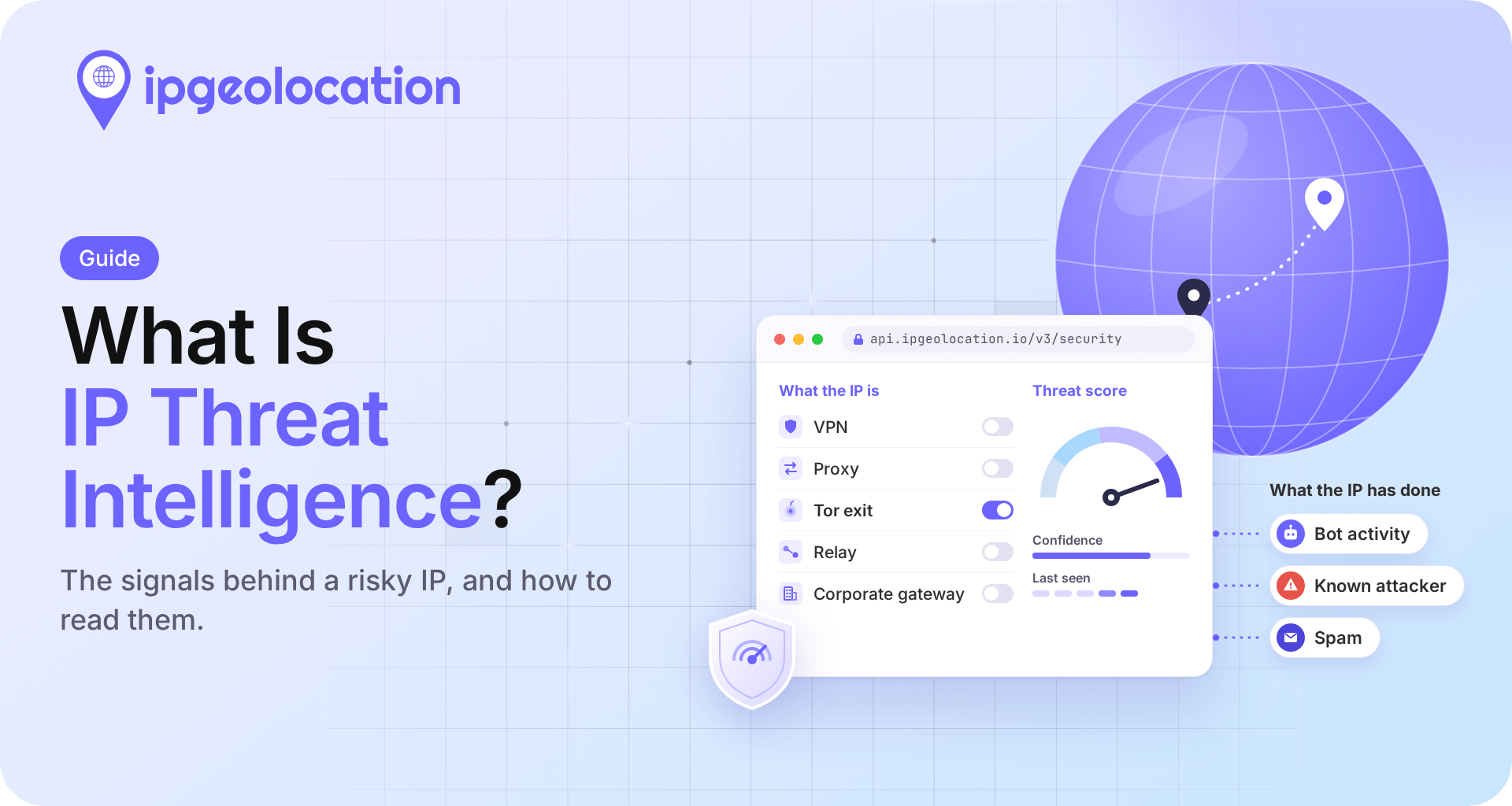
IP threat intelligence tells you what an address is and what has come from it. See how VPN, proxy, Tor, relay, bot, and attacker signals differ, and how to act on them without turning away good users.
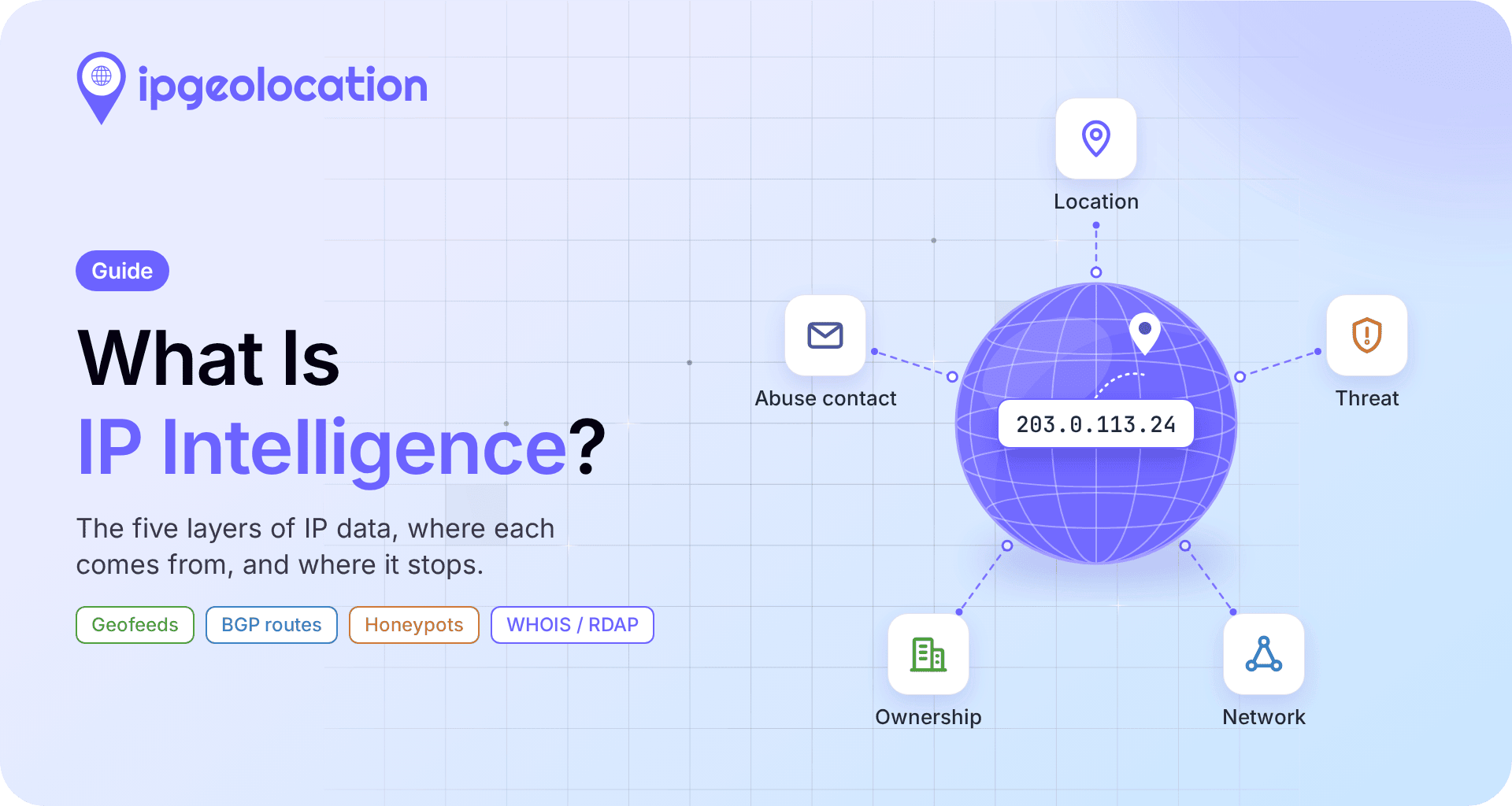
IP intelligence is the data attached to an IP address: location, threat signals, network, ownership, and abuse contacts. It explains where each layer comes from, why one IP's company and ASN can differ, and where the data ends.
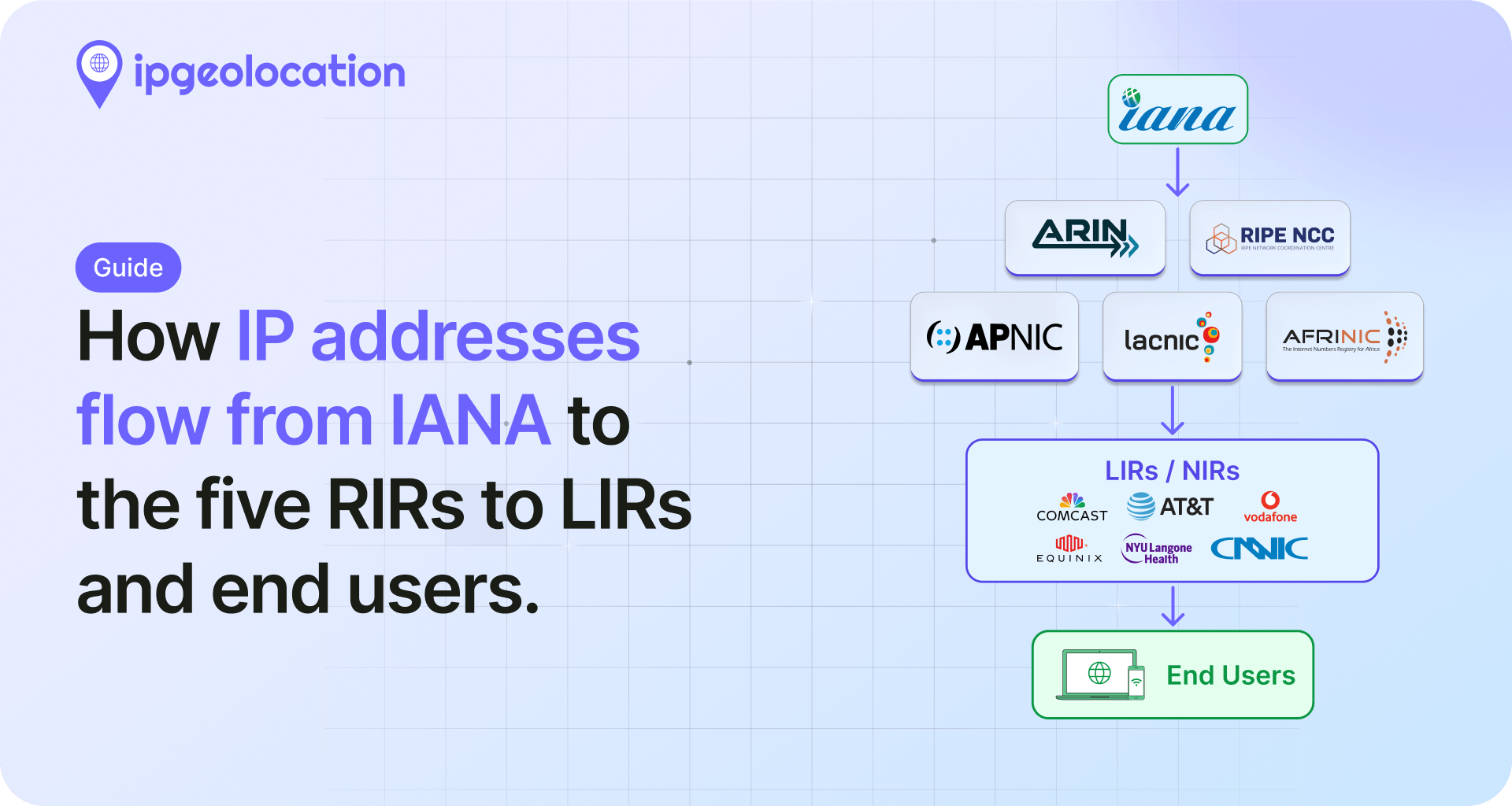
A regional internet registry (RIR) hands out the IP addresses and AS numbers a region runs on. Here are the five RIRs, where each one operates, how IANA and LIRs fit around them, and why the answer shows up every time you run a WHOIS lookup.
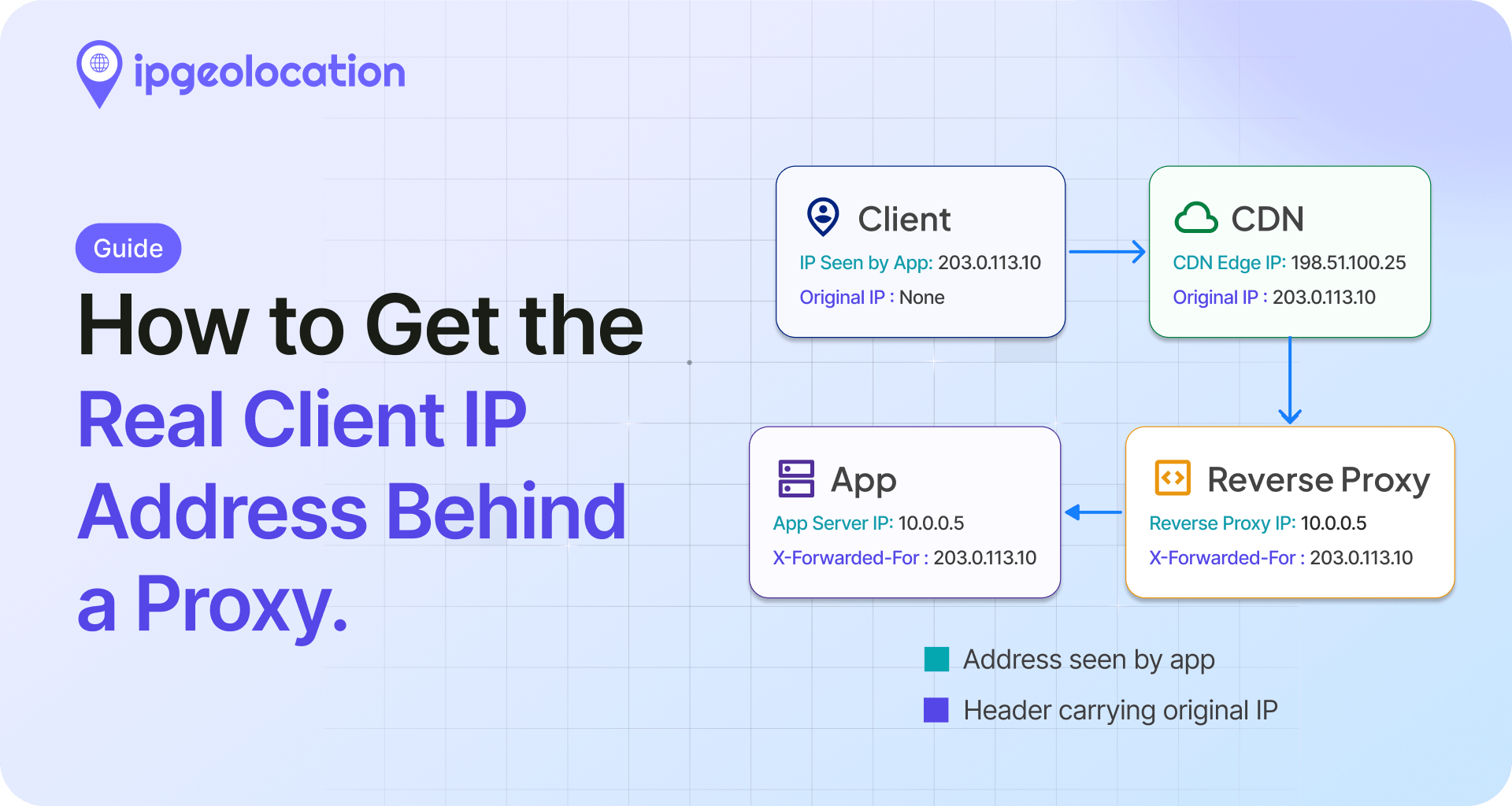
The real client IP is easy to get wrong behind a proxy or CDN. Here is how X-Forwarded-For, X-Real-IP, and CF-Connecting-IP work, which one to trust in each setup, and how to read the real IP without getting spoofed.
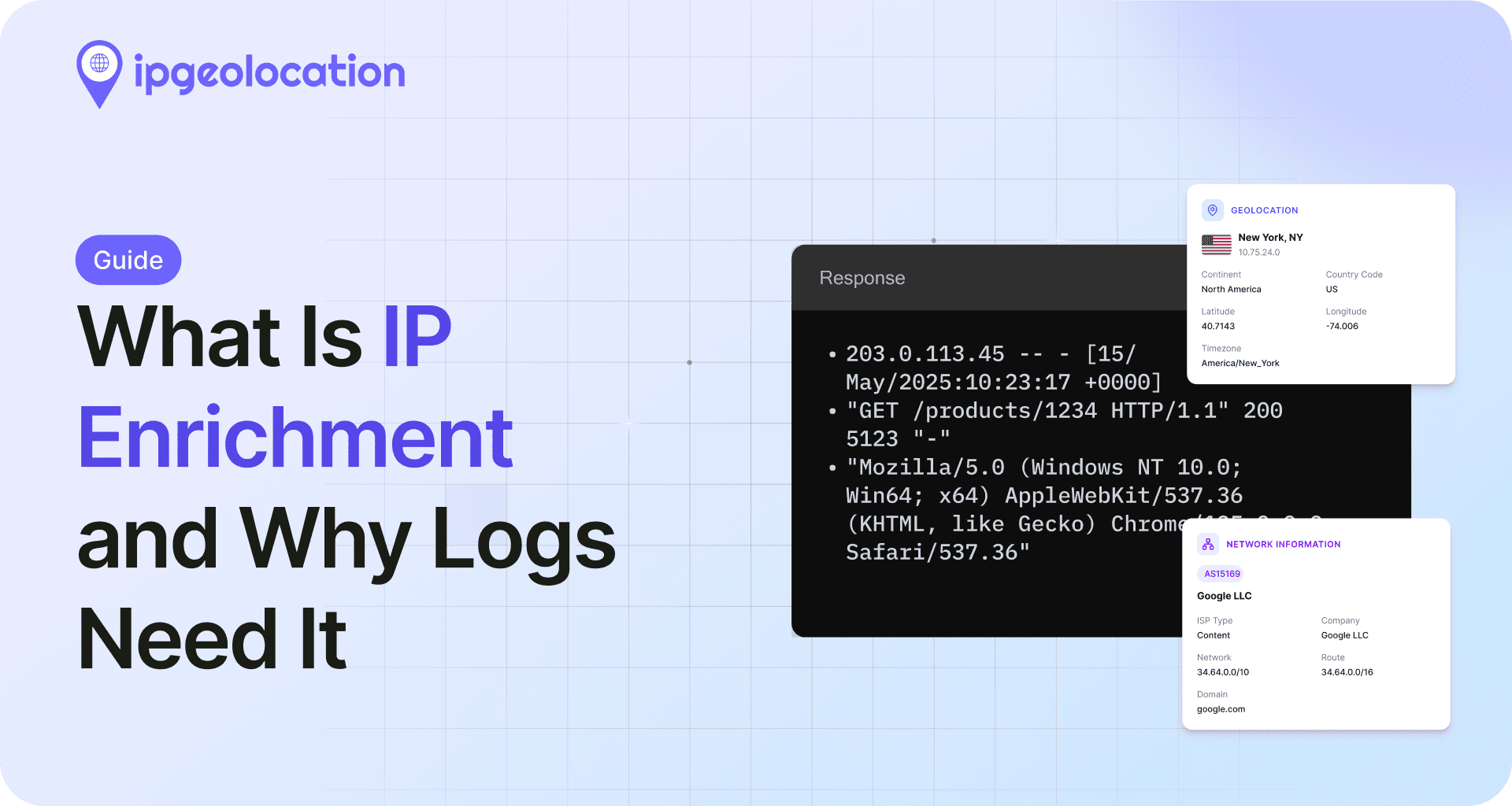
IP enrichment turns raw IP addresses in your server logs into useful context – geolocation, ASN, company, and threat data. This guide covers what enrichment adds, when to use an API vs. a local database, and how to implement both with production-ready Python and Node.js code.
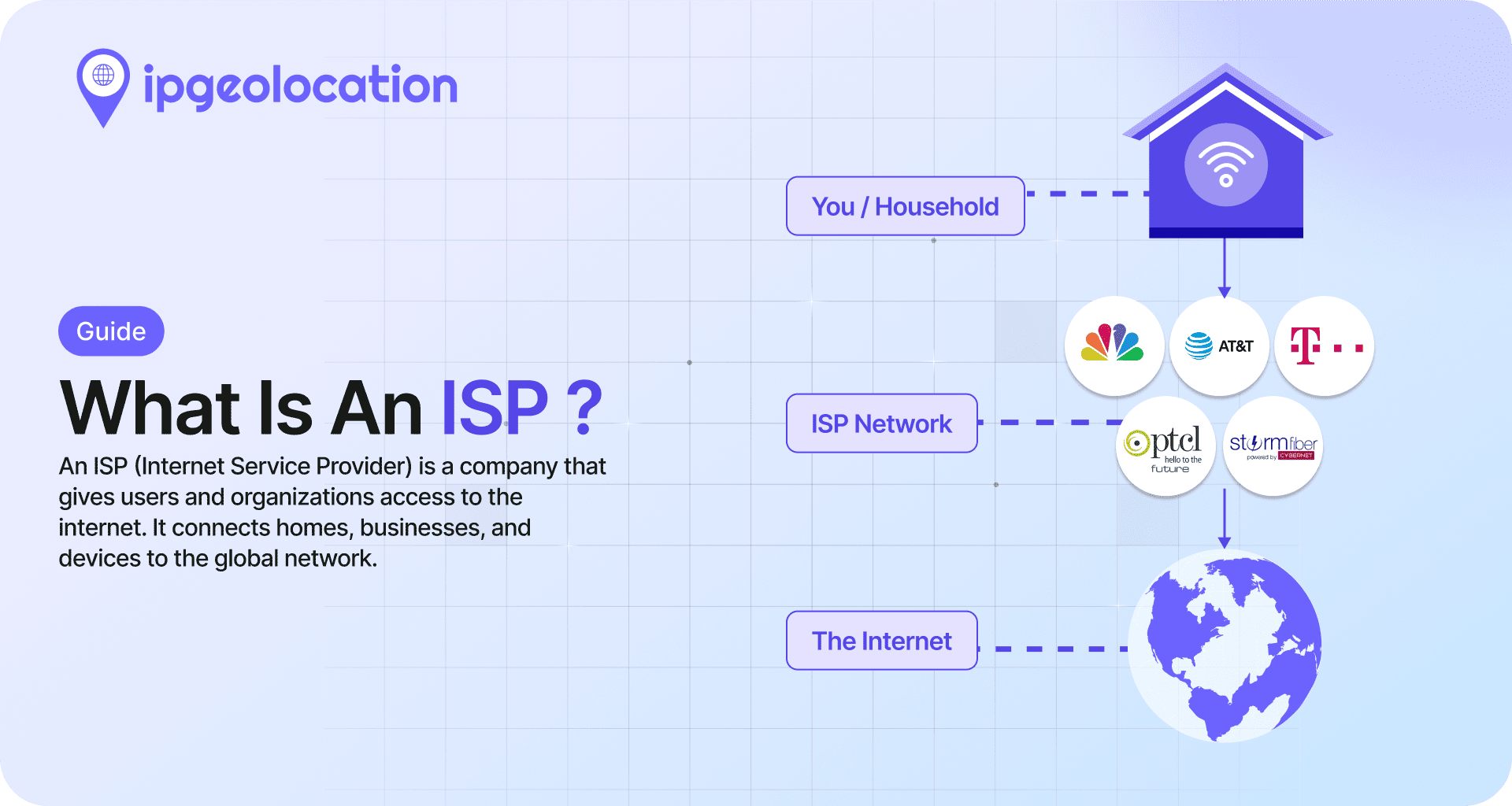
An ISP, or Internet Service Provider, is the company that gives you access to the internet and an ASN is a number that identifies one of the networks an ISP runs on the internet.
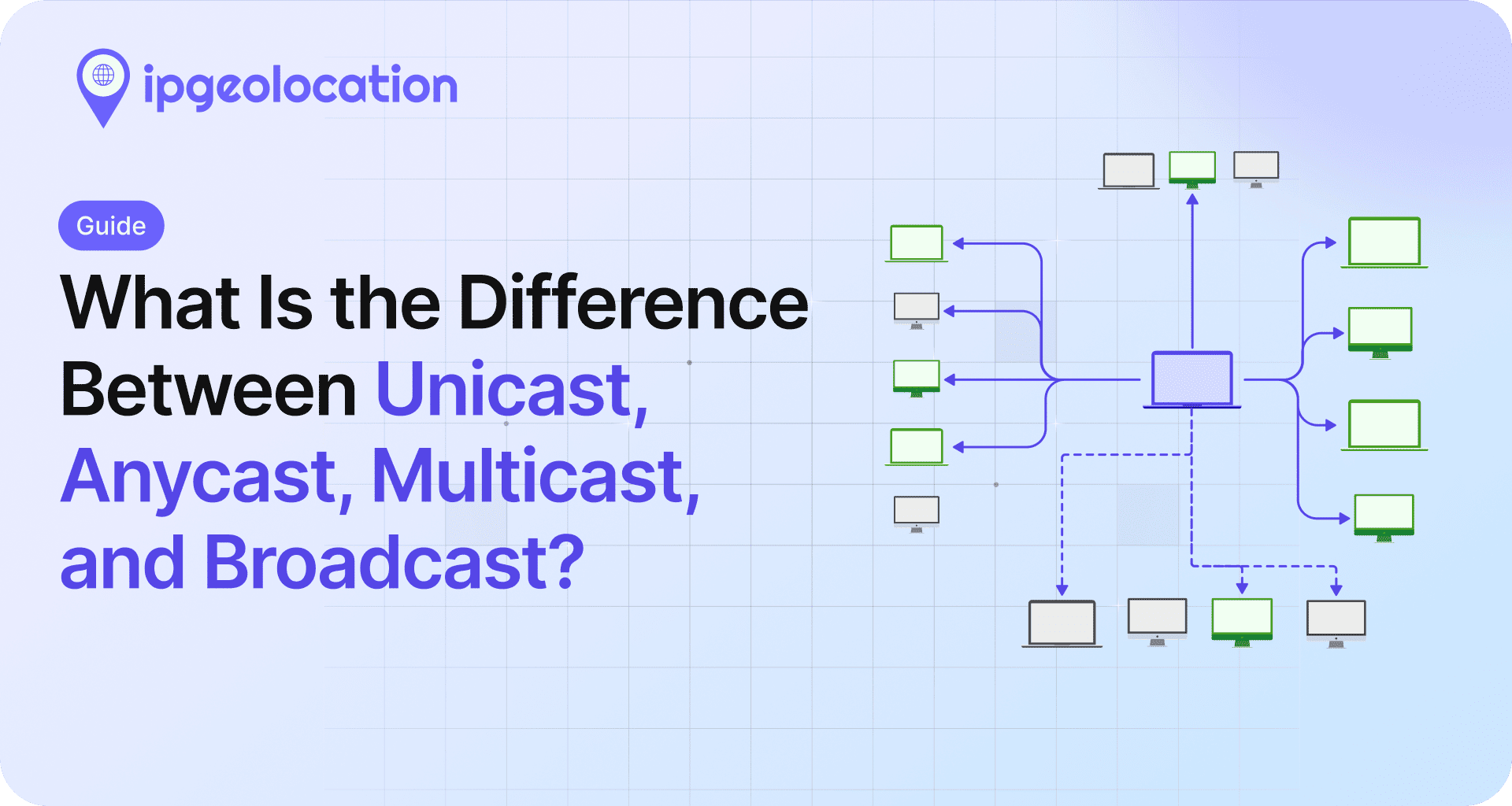
Unicast, broadcast, multicast, and anycast are four ways network traffic reaches its destination. This guide covers how each one works, when to use it, and how anycast routing affects IP geolocation accuracy.
Learn how to set up geo redirects that route website visitors to localized pages based on their country. Includes JavaScript and PHP code, SEO guidance, and best practices.
A developer guide to blocking visitors by country, with working code in JavaScript, Python, and PHP, honest trade-offs between CDN, WAF, DNS, and application-level enforcement, and a real treatment of VPN and proxy bypass.
IP addresses identify every device on the internet, but most explanations barely scratch the surface. This guide covers how they work, IPv4 vs IPv6, address types, assignment chains, what your IP reveals through geolocation, and how to stay protected.
Bogons and martians overlap but aren't the same. A clear, RFC-grounded comparison that breaks down traditional bogons, fullbogons, and IPv6 bogons, with classification examples, filtering rules for routers, firewalls, and Linux, and notes on how geolocation APIs handle reserved IPs.
A geofeed is how network operators publish the real locations of their IP ranges so geolocation providers can stop guessing. This guide covers the RFC 8805 format, RFC 9632 discovery, per-RIR submission, and how to publish to IP geolocation providers.
An ASN (Autonomous System Number) is a unique identifier assigned to a network for internet routing via BGP. This guide explains ASN types, real-world examples, and how to look up ASN data for any IP address.
IP geolocation maps IP addresses to geographic locations like country, city, and timezone. This guide covers how it works, how accurate it really is, and what developers and businesses use it for in 2026.
Bogon IP addresses are unallocated or reserved IPs that should never appear on the public internet. This guide covers the full IPv4 and IPv6 bogon range lists, security risks, and practical filtering methods.
Learn when to use an IP geolocation API vs a downloadable database, and whether MMDB or CSV fits your workflow. A practical guide based on real setup decisions.
Get the latest in geolocation tech, straight to your inbox.