



IPGeolocation.io Research
Original research and data-driven investigations into proxies, VPNs, threat infrastructure, and the IP address landscape.
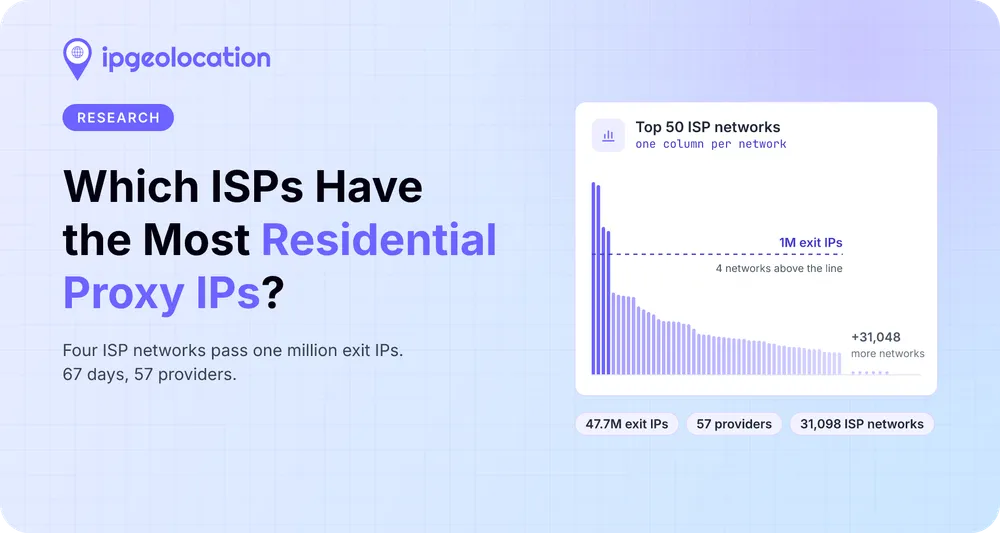
Four ISP networks, all national telecoms, each had more than a million residential proxy exit IPs in IPGeolocation.io's 67-day data, while Comcast and Rostelecom carry the most on an average day. Here are the rankings by ISP and by country, and what they mean for IP rules.
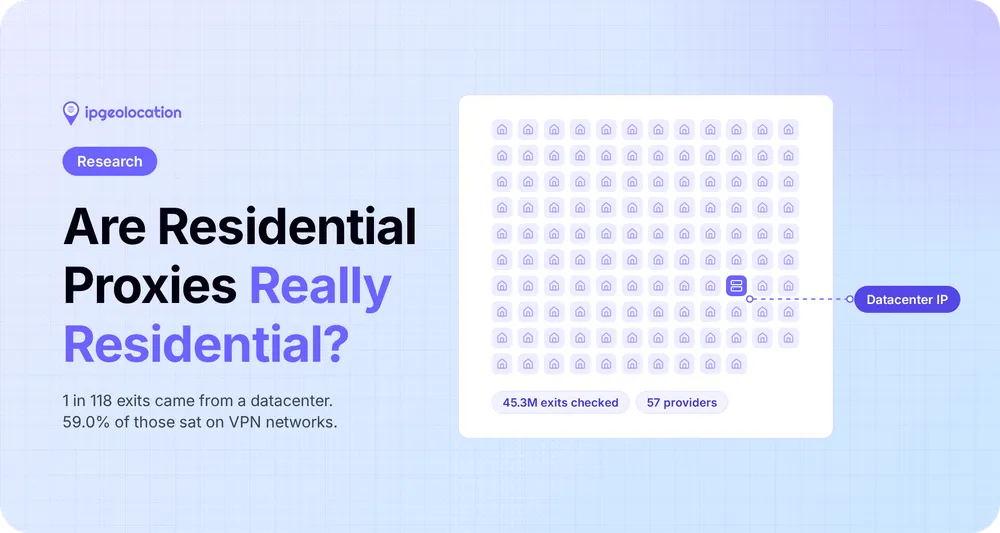
Of 45.3 million residential and mobile proxy IPv4 exits IPGeolocation.io saw over 62 days, 1 in 118 sat on a datacenter network, and 59.0% of those were on VPN networks. Here is how we checked, what those datacenter exits are, and what a hosting check misses.
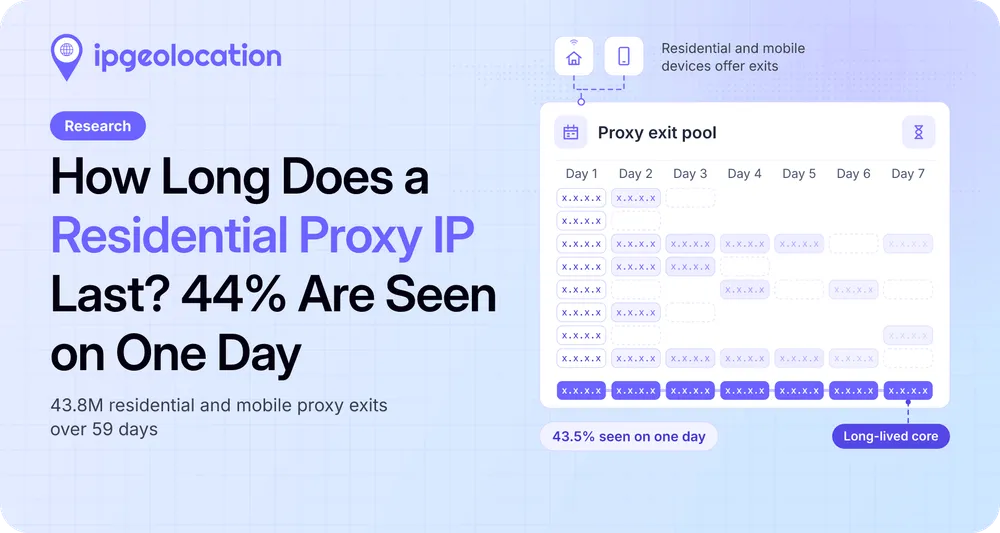
Of 43.8 million residential and mobile proxy IPv4 exits IPGeolocation.io saw over 59 days, 43.5% were offered on only one day, yet a long-lived minority made up most of each day's exits. Here is the data, how lifetimes track the ISP's addressing, and what it means for proxy lists.
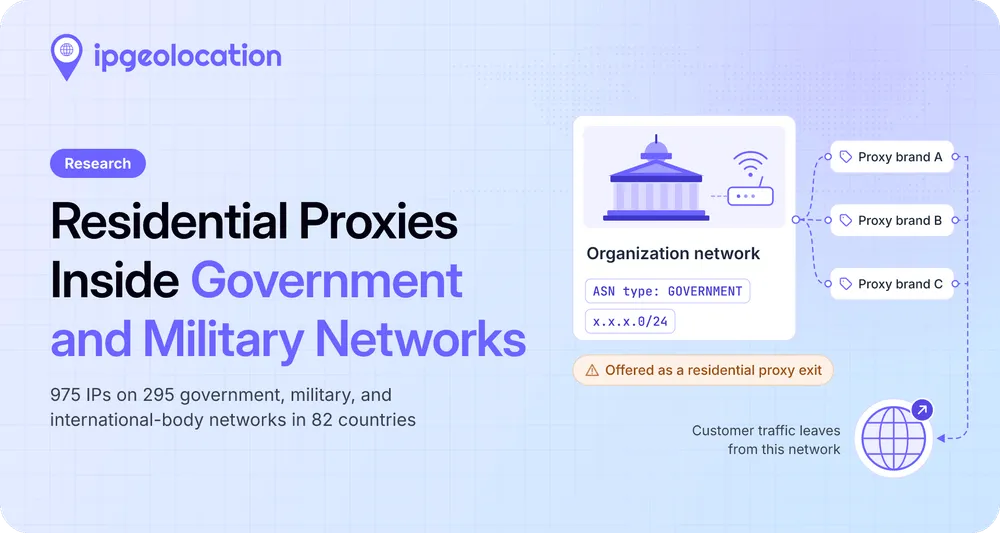
Between February and November 2026, IPGeolocation.io saw 975 addresses on 295 government, military, and international-body networks in 82 countries offered as residential proxy exits, from the White House to the UN Office at Nairobi. Here is the evidence, network by network.