



An ASN (Autonomous System Number) is a unique identifier assigned to a network that participates in internet routing through the Border Gateway Protocol (BGP). Every large network on the internet, from Google to your local ISP, has at least one ASN. These numbers are how routers across the globe know where to send traffic, and they play a central role in cybersecurity, fraud detection, and network engineering.
This guide covers what autonomous systems are, how ASNs work in BGP routing, the different types, who assigns them, and how to look up ASN data for any IP address or network.
TL;DR
- An ASN is a number assigned to a network (autonomous system) so BGP routers can identify it and exchange routing information.
- There are roughly 80,000 active ASNs on the internet today.
- Two formats exist: 16-bit ASNs (up to 65,536 values) and 32-bit ASNs (up to 4.2 billion values).
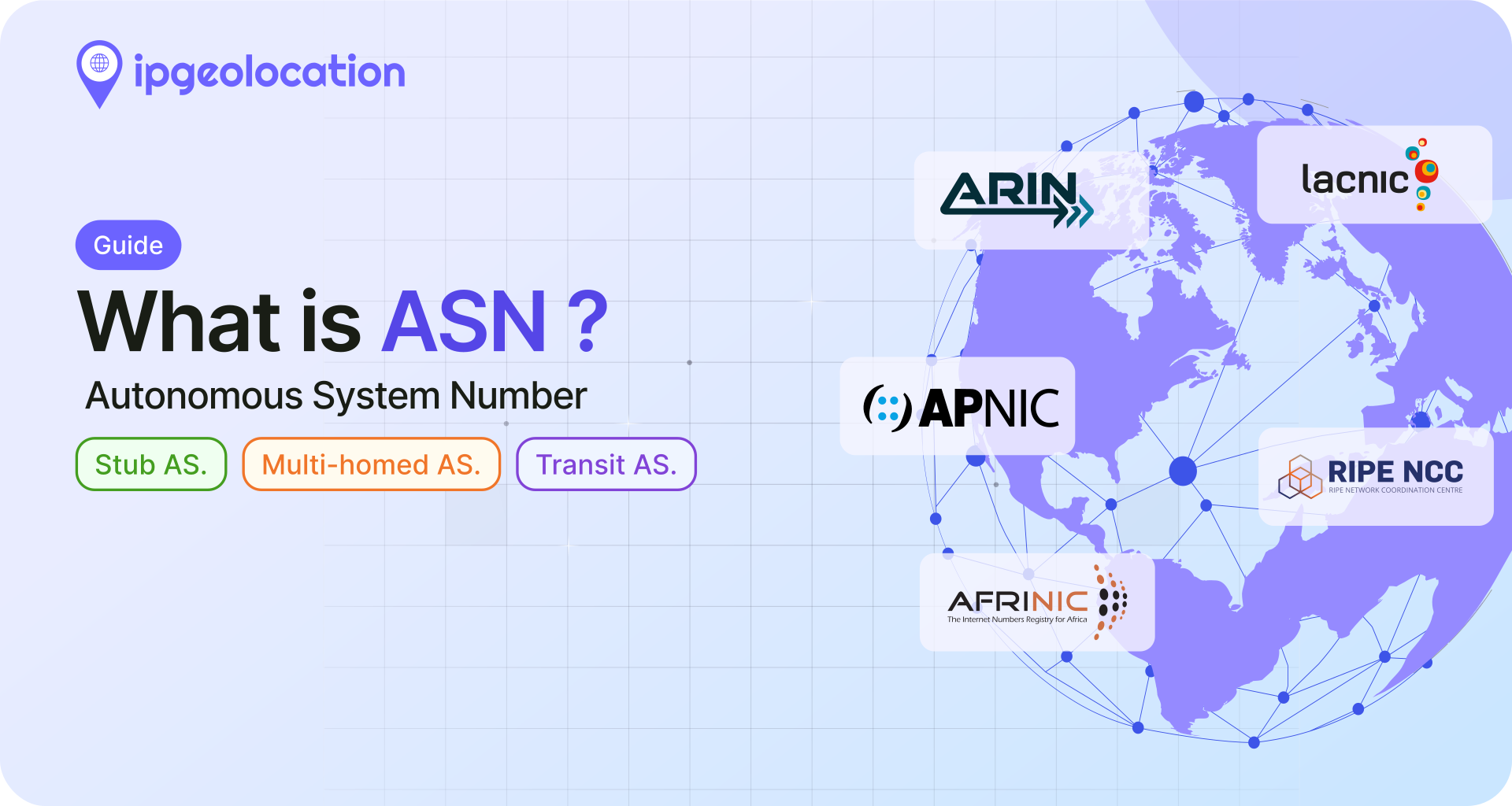
- Three types of autonomous systems: stub (single upstream connection), multi-homed (multiple upstreams), and transit (carries traffic for other networks).
- Five Regional Internet Registries (RIRs) assign ASNs: ARIN, RIPE NCC, APNIC, AFRINIC, and LACNIC.
- ASN data is used in threat intelligence, fraud prevention, network analysis, and traffic engineering.
In short, ASNs are the internet's addressing system for networks rather than individual devices. If IP addresses are street addresses, ASNs are zip codes that help the postal system (BGP) figure out which regional hub should handle a delivery.
What is an Autonomous System?
An autonomous system (AS) is a collection of IP address ranges (called prefixes) that operate under a single routing policy, managed by one organization. Think of it as a network of networks. An ISP like Comcast, a cloud provider like AWS, or a content delivery network like Cloudflare each operates their own autonomous system.
The key requirement is a unified routing policy. Internally, an AS can run any routing protocols it wants (OSPF, IS-IS, EIGRP). But to the rest of the internet, it presents a single, consistent set of rules about which IP prefixes it owns and which paths traffic should take to reach them.
As of early 2026, there are roughly 80,000 active autonomous systems visible in the global BGP routing table. That number has grown from around 47,000 in 2015, reflecting the increasing complexity of internet infrastructure and the growth of cloud services, CDNs, and regional ISPs.
How ASNs Work in Internet Routing
1. BGP and the Role of ASNs
BGP (Border Gateway Protocol) is the routing protocol that holds the internet together. It runs between autonomous systems, and ASNs are how BGP identifies each one.
When an autonomous system wants to tell the internet about the IP prefixes it controls, it announces them via BGP. Each announcement includes an AS-PATH, which is the sequence of ASNs that traffic must traverse to reach that prefix. Routers use this path to make forwarding decisions.
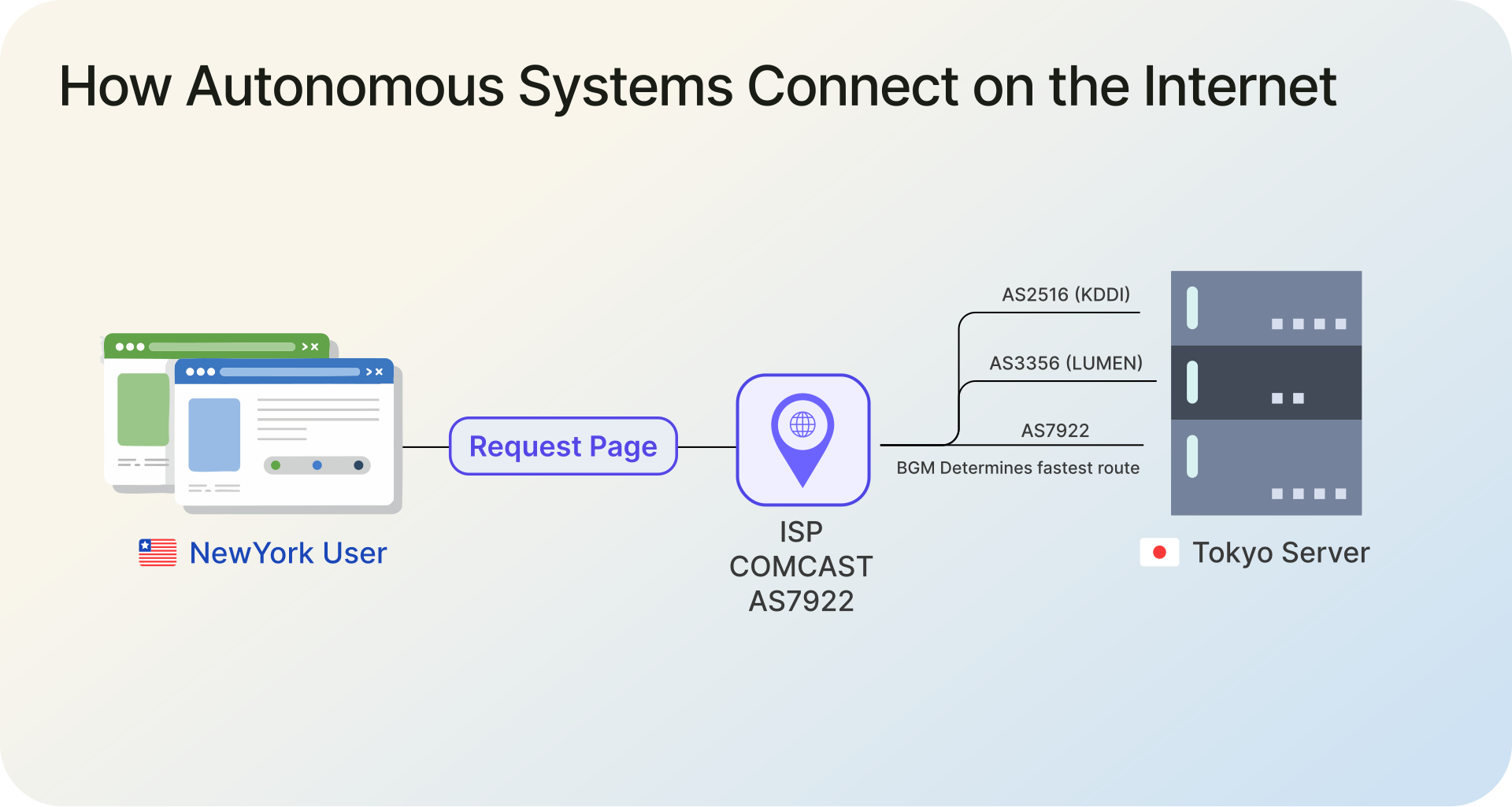
Here is a simplified example. Say you are in New York, and your browser requests a page hosted on a server in Tokyo. Your ISP (AS7922, Comcast) receives the request. BGP tells Comcast's routers that the fastest path to the destination IP goes through AS-PATH: AS7922 > AS3356 (Lumen/Level3) > AS2516 (KDDI, a Japanese carrier). Each hop in that path is an autonomous system identified by its ASN.
This is a simplified version, but the principle is the same at scale. BGP evaluates multiple possible AS-PATHs and selects the best one based on factors like path length, local preference, and peering agreements. The global BGP table held over 1 million IPv4 prefixes and roughly 250,000 IPv6 prefixes in 2026 (per the CIDR Report), and both numbers continue to grow.
2. 2-Byte vs. 4-Byte ASNs
ASNs originally used a 16-bit (2-byte) format, defined in RFC 1930. This gave a total range of 0 to 65,535, with usable public ASNs occupying the range 1 to 64,511. IANA reserved 64,512 to 65,534 for private use, and 65,535 as a special-purpose value.
By the mid-2000s, the 16-bit pool was running low. RFC 4893 introduced 32-bit (4-byte) ASNs in 2007 (later revised by RFC 6793 in 2012), expanding the range to 0 to 4,294,967,295. That is over 4.2 billion possible values, enough to accommodate internet growth for the foreseeable future. The transition to 4-byte ASN support across BGP implementations has been ongoing since 2007, and most modern routers and route servers now handle them without issues.
You can tell them apart by notation. A 2-byte ASN looks like AS15169. A 4-byte ASN in "asdot" notation might look like AS4.12345, though the plain integer format (AS262144, for example) is more common today.
3. Upstreams, Downstreams, and Peers
A detailed ASN record shows three types of relationships between networks: upstreams, downstreams, and peers. BGP does not declare these explicitly. They are inferred from observed AS-PATHs in the global routing table, based on how each network actually routes traffic.
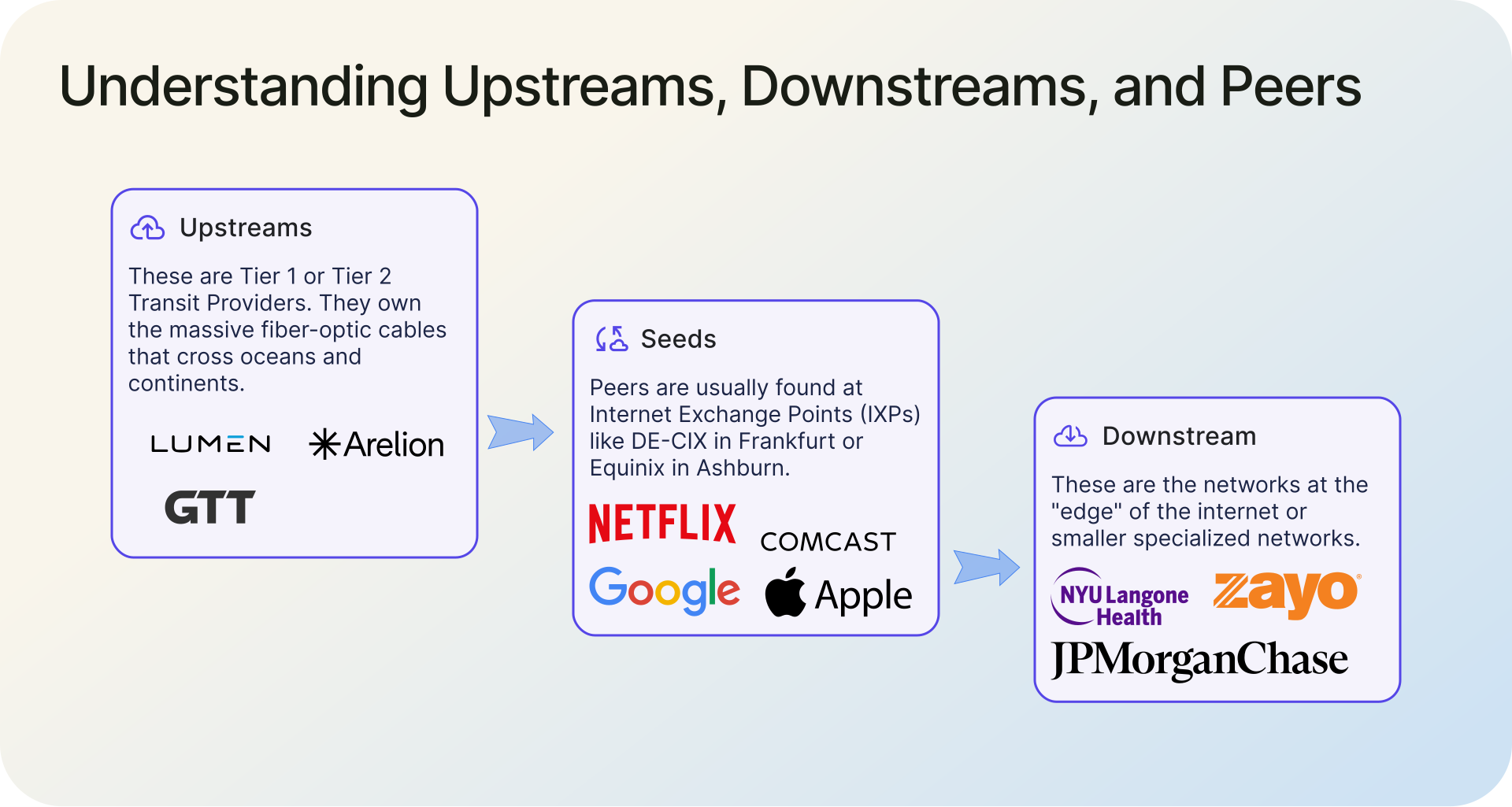
Upstreams are your providers. They carry your traffic to the rest of the internet, announce your prefixes to their own upstreams and peers, and get paid for the service. Most networks have at least one upstream, and multi-homed networks have several for redundancy.
Downstreams are your customers. They route through your network to reach the wider internet, and you announce their prefixes on their behalf. Transit providers have many downstreams. Stub networks have none.
Peers sit at the same level. Two networks exchange traffic directly, often on a settlement-free basis, usually at an Internet Exchange Point or private interconnect. Peering only carries traffic between the two networks and their respective customers, not across to the wider internet. This is the valley-free routing principle in practice: traffic should go up to a provider, across to a peer, and down to a customer, but never up again after coming down.
New York University is a good illustration. NYU operates AS12, allocated on July 5, 1984 and now managed by ARIN, making it one of the oldest ASNs on the internet. Its BGP relationships show 8 upstream providers including Level 3 (AS3356), GTT (AS3257 and AS286), Zayo (AS6461), and COLT (AS8220), which connect NYU to the wider internet. Its 2 downstreams are NYU Langone Health (AS394666) and the Polytechnic Institute of NYU (AS54965), both of which route through NYU to reach the rest of the world. NYU also maintains peering relationships at exchange points with a mix of commercial and research networks, which is why its peer list overlaps with both its upstreams and downstreams.
Types of Autonomous Systems
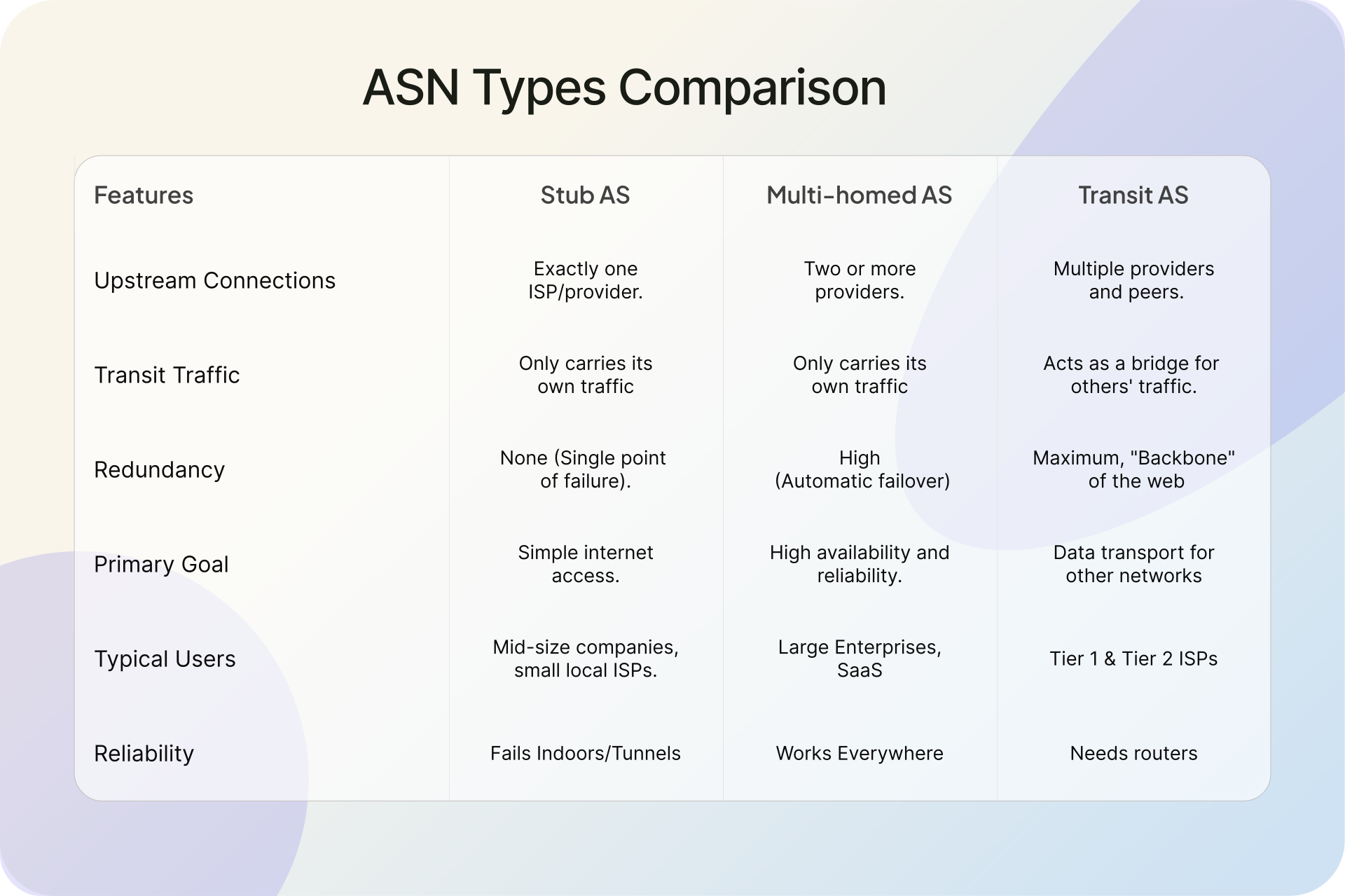
Not all autonomous systems play the same role. They fall into three categories based on how they connect to other networks.
Stub AS. A stub autonomous system has a single connection to one upstream provider. It does not carry transit traffic for anyone else. The vast majority of autonomous systems fall into this category. A mid-size company with its own IP space and one ISP connection is a typical stub AS.
Multi-homed AS. A multi-homed autonomous system connects to two or more upstream providers for redundancy. If one link goes down, traffic reroutes through the other. Most enterprises and SaaS companies that need high availability operate multi-homed ASes. The defining feature is that a multi-homed AS does not allow transit traffic between its upstreams.
Transit AS. A transit autonomous system carries traffic between other autonomous systems. Major ISPs and Tier 1 network providers like Lumen (AS3356), NTT (AS2914), and Cogent (AS174) are transit ASes. They form the backbone of the internet, and their ASNs appear in a large percentage of global AS-PATHs. AS3356, for instance, is one of the most connected ASNs in the world, visible in the routing tables of nearly every network.
Who Assigns ASNs?
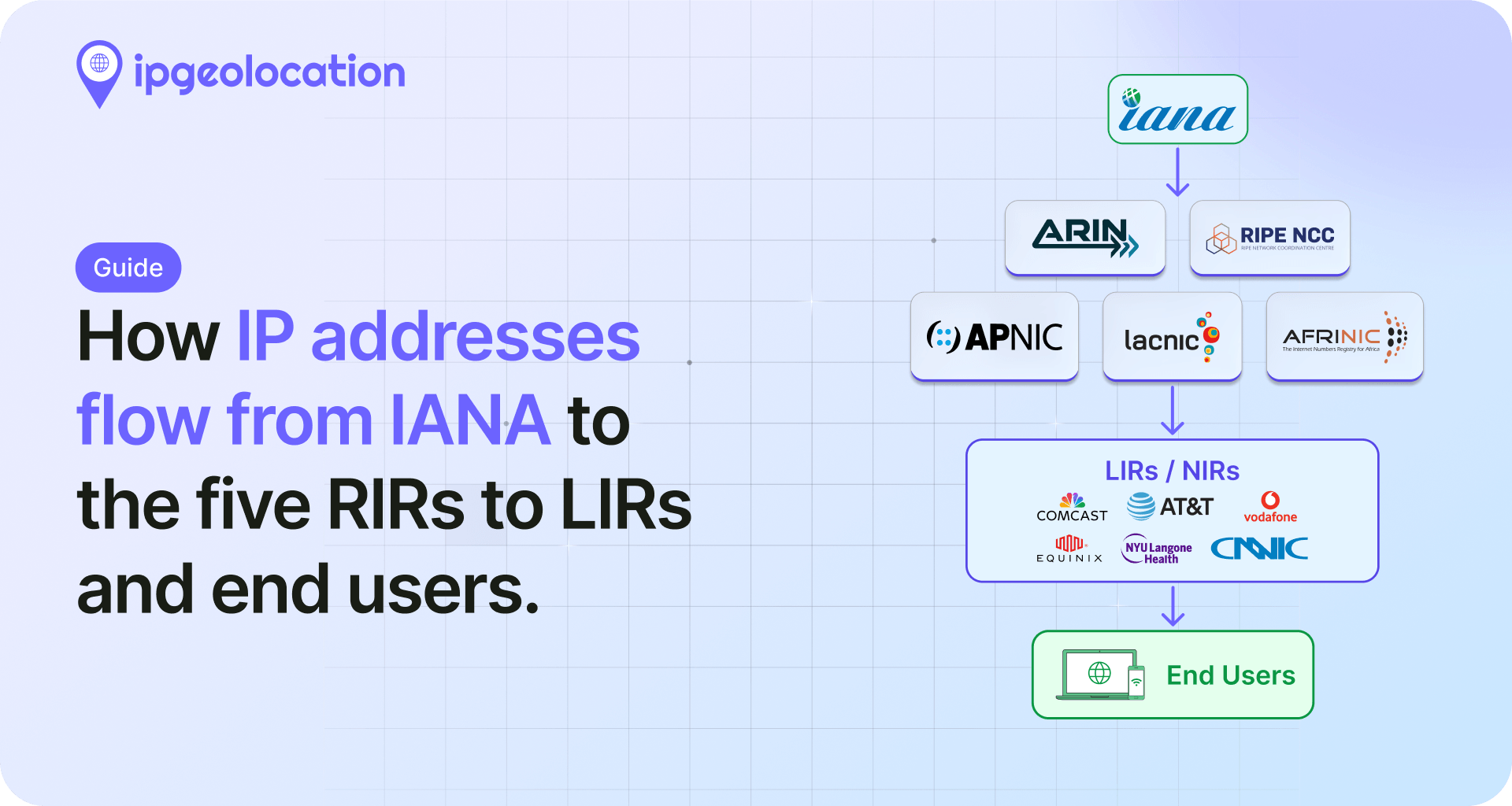
The Internet Assigned Numbers Authority (IANA) manages the global pool of ASNs and delegates blocks to five Regional Internet Registries (RIRs). Each RIR covers a different geographic area:
- ARIN covers North America (United States, Canada, parts of the Caribbean).
- RIPE NCC covers Europe, the Middle East, and parts of Central Asia.
- APNIC covers the Asia-Pacific region.
- AFRINIC covers Africa.
- LACNIC covers Latin America and the Caribbean.
ASN assignment criteria vary by RIR, but common justifications include multihoming or a distinct external routing policy. You cannot get an ASN just to have one.
Cost varies significantly by region and method. Some organizations go through a sponsoring LIR (Local Internet Registry), while others apply directly to their RIR. Fees range from modest annual charges for LIR-sponsored assignments to several thousand dollars per year for direct RIR membership, depending on the registry and the organization's size. Each RIR publishes its current fee schedule on its website.
Real-World ASN Examples
Abstract definitions are easier to understand with concrete examples. Here are some of the most well-known autonomous systems on the internet.
AS15169, Google LLC. Registered with ARIN in 2000, Google's primary ASN announces over a thousand IPv4 routes and more than a hundred IPv6 routes. It is classified as a BUSINESS type and peers with thousands of networks globally. Google also operates additional ASNs for specific services, including AS36040 and AS396982.
AS13335, Cloudflare. Cloudflare's ASN is present at hundreds of Internet Exchange Points (IXPs) worldwide. As a major CDN and DNS provider, its routing footprint is one of the most distributed on the internet.
AS16509, Amazon (AWS). Amazon Web Services operates under this ASN, which covers a massive IP range across all AWS regions. Its route count reflects the scale of cloud infrastructure it supports.
AS32934, Meta (Facebook). Meta's primary ASN handles routing for Facebook, Instagram, WhatsApp, and related services.
AS7922, Comcast. A major residential ISP ASN in the United States. Unlike the others on this list, Comcast is primarily a transit and access provider, not a content network.
You can look up any of these ASNs and explore their routes, peers, and organizational details using the ipgeolocation.io ASN browser. The browse tool also lets you view ASNs by country, which is useful for regional network research.
How to Look Up an ASN
1. Look Up ASN by IP Address
If you have an IP address and want to know which network owns it, an IP-to-ASN lookup gives you the answer. The ipgeolocation.io ASN Lookup API resolves any IPv4 or IPv6 address to its associated ASN and returns detailed network metadata.
Example request:
curl 'https://api.ipgeolocation.io/v3/asn?apiKey=YOUR_API_KEY&ip=8.8.8.8&include=routes,peers,upstreams,downstreams,whois_response'This returns the ASN (AS15169), organization name (Google LLC), country, ASN type, domain, allocation date, routes, upstreams, downstreams, peers, WHOIS response, and the Regional Internet Registry where it is registered. Each lookup costs 1 API credit. Full request and response documentation, with HTTP examples, is available in the ASN API docs.
2. Look Up ASN Details by Number
If you already know the ASN, you can query it directly to get organizational details, route prefixes, and peering relationships.
curl 'https://api.ipgeolocation.io/v3/asn?apiKey=YOUR_API_KEY&asn=24940&include=peers,upstreams,downstreams,routes,whois_response'
The response for AS24940 (Hetzner Online GmbH) includes:
{
  "asn": {
    "as_number": "AS24940",
    "organization": "Hetzner Online GmbH",
    "country": "DE",
    "type": "HOSTING",
    "domain": "hetzner.com",
    "date_allocated": "2002-06-03",
    "asn_name": "HETZNER-AS",
    "allocation_status": "ASSIGNED",
    "num_of_ipv4_routes": "86",
    "num_of_ipv6_routes": "6",
    "rir": "RIPE",
    "routes": [
      "78.46.0.0/15",
      "138.199.128.0/17",
      "..."
    ],
    "downstreams": [
      {
        "as_number": "AS209148",
        "description": "Securepoint GmbH",
        "country": "DE"
      },
      "..."
    ],
    "upstreams": [
      {
        "as_number": "AS12552",
        "description": "GlobalConnect AB",
        "country": "SE"
      },
      "..."
    ],
    "peers": [
      {
        "as_number": "AS58057",
        "description": "Securebit AG",
        "country": "CH"
      },
      "..."
    ],
    "whois_response": "% This is the RIPE Database query service.\n% The object..."
  }
}
The type field is particularly useful. The ipgeolocation.io API classifies ASNs into categories like BUSINESS, HOSTING, ISP, EDUCATION, and GOVERNMENT, which directly informs security and fraud analysis. A login attempt from a HOSTING ASN, for example, is far more likely to come from a VPN or proxy than from a residential ISP.
3. ASN Databases for Bulk Analysis
API lookups work well for real-time queries, but some use cases demand offline access to the full dataset. Network-wide threat analysis, firewall rule generation, and compliance audits all benefit from having a local copy of ASN data.
The IP-to-ASN database from ipgeolocation.io contains approximately 30 million entries mapping IP ranges to their associated ASNs, organizations, countries, and network types. It ships in CSV and MMDB formats and receives daily updates.
For organizational and contact data about the ASN itself (who owns it, abuse contacts, registration details), the ASN WHOIS database covers over 130,000 ASN records with 55 fields per entry. This is the dataset you need when you want to identify who operates a network and how to reach them.
Both databases are available through ipgeolocation.io's pricing plans as individual purchases or bundled with other IP intelligence datasets.
Why ASN Data Matters
1. Cybersecurity and Threat Intelligence
Security teams use ASN data to attribute attacks to source networks and identify patterns. If a wave of brute-force login attempts originates from IP addresses within the same ASN, that is a strong signal. Blocking or rate-limiting by ASN is often more effective than blocking individual IPs, since attackers frequently rotate addresses within the same network block.
ASN reputation scoring is a growing practice. Certain hosting ASNs are disproportionately associated with malicious infrastructure, and threat intelligence feeds increasingly include ASN-level risk indicators alongside IP-level ones. Services like Spamhaus maintain ASN-DROP lists that flag the worst offenders.
2. Fraud Prevention
E-commerce and financial platforms use ASN classification as a risk signal during transaction processing. The logic is simple: if a user claims to be in London but their IP resolves to an ASN classified as HOSTING and registered in Romania, the transaction deserves closer scrutiny. Distinguishing between residential ISP ASNs and hosting/VPN provider ASNs is one of the most reliable methods for detecting proxy usage. It is not perfect on its own, but combined with device fingerprinting and behavioral analysis, ASN type adds a strong and difficult-to-fake signal layer.
3. Network Engineering and Traffic Analysis
Network engineers use ASN data for peering decisions, traffic engineering, and capacity planning. Understanding which ASNs carry the most traffic to your network helps you decide where to establish direct peering relationships, which can reduce latency and transit costs.
BGP hijack detection also relies on ASN data. When an ASN unexpectedly announces prefixes it does not own, monitoring systems flag the anomaly by comparing the announcement against known ASN-to-prefix mappings. The 2018 BGP hijack that briefly rerouted traffic destined for Amazon's Route 53 DNS service was detected precisely through this kind of ASN-level monitoring.
This is one area where the "boring" infrastructure data quietly becomes critical. Most teams do not think about ASN data until an incident forces them to, and by then they are scrambling to map IPs to networks under pressure.
Frequently Asked Questions
An AS (autonomous system) is the network itself, the collection of IP prefixes under a single routing policy. An ASN (autonomous system number) is the unique numeric identifier assigned to that network. Every AS has at least one ASN, and large organizations like Google operate multiple ASNs for different parts of their infrastructure.
Roughly 80,000 ASNs are actively visible in the global BGP routing table as of 2026. The theoretical maximum under the 32-bit numbering scheme is over 4.2 billion, so there is no practical near-term exhaustion concern. The 16-bit ASN range (1 to 65,535) is nearly fully allocated, which is why 32-bit ASNs were introduced.
Yes. Large organizations often operate several ASNs to separate different business units, geographic regions, or acquired infrastructure. Google, for example, uses AS15169 as its primary ASN but also operates AS36040, AS396982, and others. Amazon has separate ASNs for AWS, its retail operations, and acquired companies like Twitch.
Private ASNs are reserved for internal use and must not appear in the global BGP routing table. The 16-bit private range is 64,512 to 65,534, and the 32-bit private range is 4,200,000,000 to 4,294,967,294. A common use is a customer network that runs eBGP with its ISP using a private ASN. The ISP removes the private ASN before advertising the customer's routes to the rest of the Internet, so the number never needs to be globally unique.
The quickest way is to look up your current public IP address using an ASN lookup tool. The result will show the ASN assigned to the network your traffic exits from, which is typically your ISP's ASN. For programmatic lookups, the ipgeolocation.io ASN API returns the ASN for any IP address with a single API call.