
More than 4.5 billion people in the world own a cell phone. That's way more than half of the whole world's population.
We practically live on our mobile devices aka cell phones, tablets, laptops, etc.
From waking up until the moment we go to sleep, we are constantly using our mobile devices for one thing or the other.
Ordering lunch? Use Uber Eats.
Buying a dress? Use Thredup.
Watching your favorite series? Use Netflix.
Going for a vacation? Use TripAdvisor.
Looking for a room to rent? Use Airbnb.
Want to shop for accessories? Use LoadBasket.
With so much use of mobile devices, user experience has been enhanced beyond what we ever imagined (and it's improving day by day).
We turn to our devices for everything, and businesses are taking full advantage of it. Gone are the days of one-for-all, generic ads. Today, each ad is carefully targeted to each person, based on their age, location, activities, hobbies, tastes, and preferences.
Of all that, the only thing we can find out without the user engaging with us is their location. Marketers use it to their full advantage.
Exact location requires permission, but IP Geolocation is a non-invasive way of finding out where your visitor is coming from.
What is IP Geolocation?
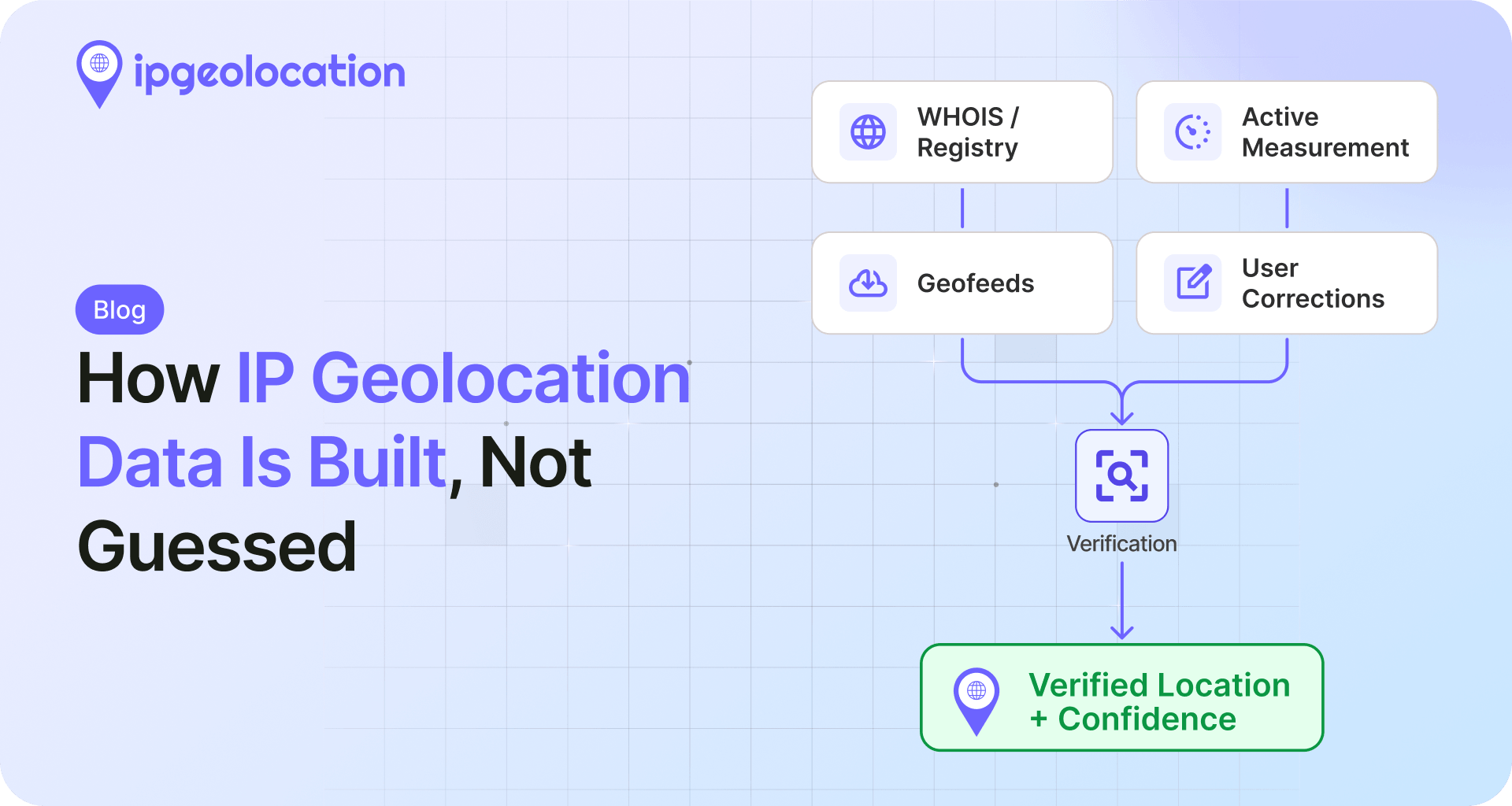
IP geolocation estimates where an internet user is located from their IP address. Wherever you go online, your device is assigned an IP address. The address itself identifies a network connection; it doesn't carry location data. Geolocation providers estimate the location by matching the address against network registration records, routing data, and network measurements. Online businesses use that estimate to understand where their visitors are.
This geolocation method may not be accurate to-the-tee, but it's still useful as heck.
Benefits of using IP Geolocation:
- It's non-invasive. Unlike other methods (which are, albeit more accurate), it doesn't require you to give up your exact location. Hundreds of websites and apps use GPS to track your exact location. This increases the probability of a data breach. Many companies sell this data to larger companies, which then use it to target ads to a wider audience. (Remember Cambridge Analytica Scandal? )
IP geolocation, by contrast, returns data such as country, city, approximate coordinates, time zone, postal code, calling code, and language. It usually can't reveal a street address or a specific household. That said, under laws like the GDPR, an IP address can count as personal data, so IP and location data still need appropriate privacy safeguards. - It's easy to implement. The only effort required is to install an API on your website, and you'll get the info you need, which you can then use for ad targeting and retargeting.
- You can do so much with so little. You don't need to know your visitors' exact location to know what content to show.
Food chains like Starbucks and McDonald's identify which region their visitors are coming from, and they show that country's website content (menu and store locations).
This is also the most economical way to geolocate your visitors. IP geolocation doesn't cost an arm and a leg, but it gives you the data you need to optimize your business.
Let's take a look at some examples of e-commerce stores that are using geoIP for better customer experience:
If someone is doing IP address geolocation right, I have to say, it's Bloomingdale's. From currency to language, everything is locally optimized for the best user experience. As soon as you enter the website, you can see a pop-up that shows their international shipping and pricing policy. These are the 2 versions of the pop-up in Sweden and Pakistan.
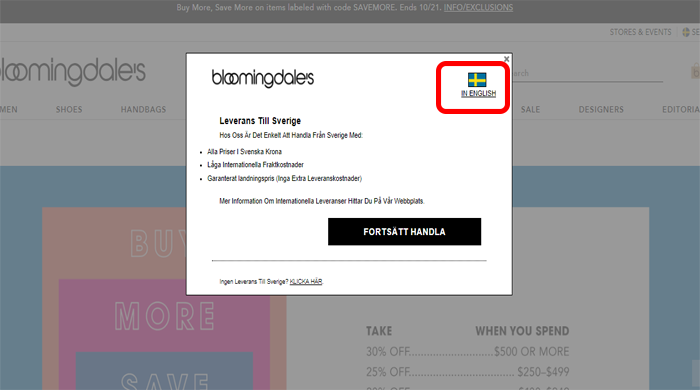
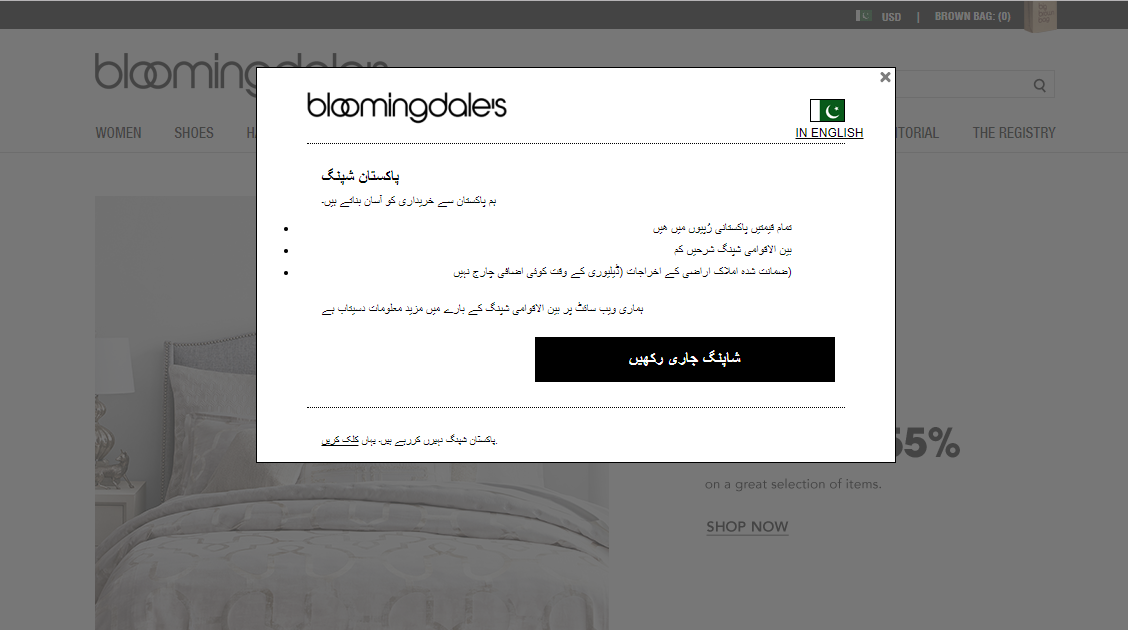
They use translation to create a highly personalized UX; their website also shows prices in the visitor's local currency. This clever use of IP geolocation pleasantly surprises visitors and compels them to buy.
This wise use of geoIP makes shopping the best and most convenient experience for each website visitor.
The luxury glasses brand website is another example that uses IP geolocation to target visitors the moment they enter the website. They are shown websites in their native language along with products that are particular for that region.
Everybody loves sales, discounts, offers, and coupons. Ray-Ban knows its target audience and uses this to its advantage by offering unique deals and discounts to buyers in different locations.
Their US audience sees an exclusive deals page, which their UK audience doesn't.
This is how Ray-Ban is offering exclusive discounts to US visitors:

- Louis Vuitton
Louis Vuitton has region-specific websites which make for a great first impression. Take a look at their France website.
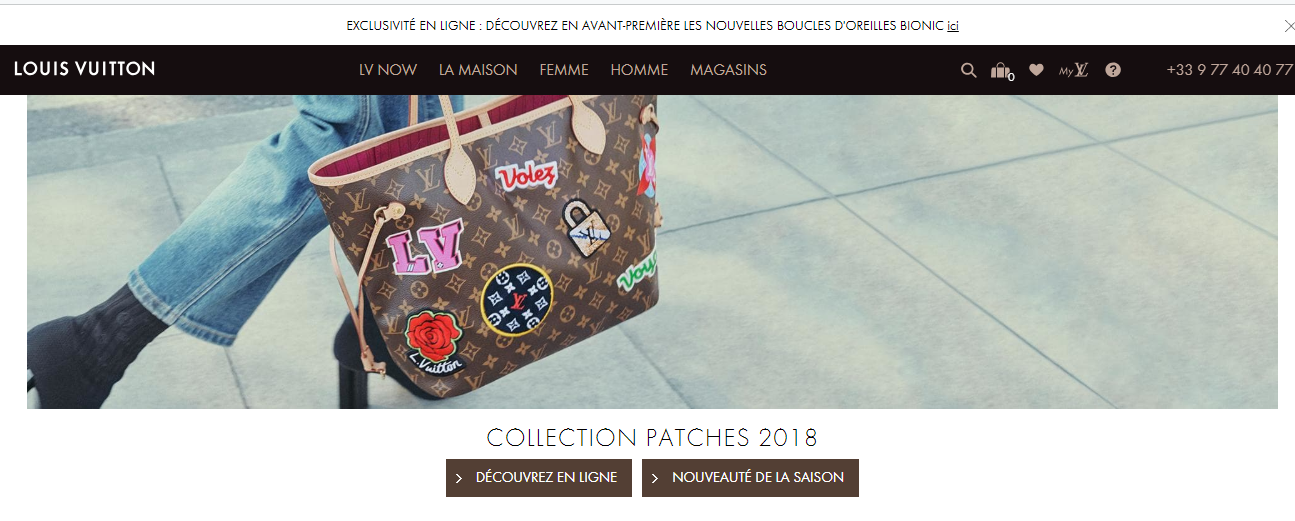
And this is their US website:
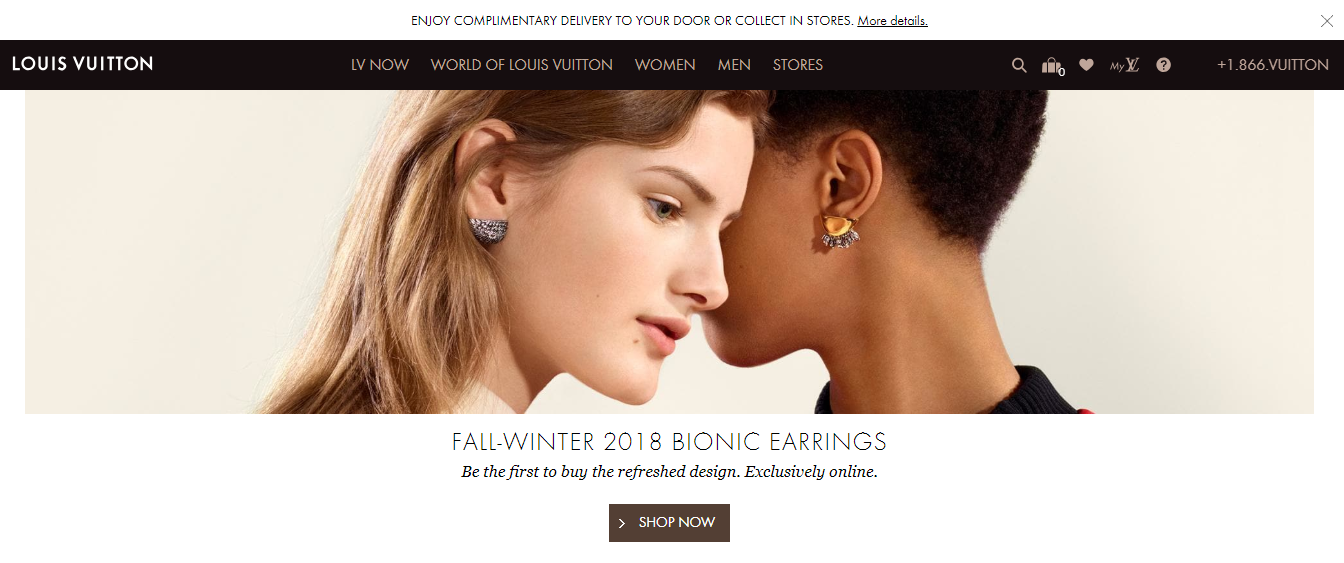
Different campaigns and different languages.
This makes for a great user experience and makes the visitor stay longer on the site, and the chances of buying increase by 6-7 times.
Bellroy is a Shopify store which sells premium leather products such as bags, laptop cases, wallets, key covers etc. Not only is the store designed beautifully with a sleek look and color combination, but it also uses geoIP very smartly. As soon as you enter the website, you can see "We ship to {your country name}" right there in the upper left corner.
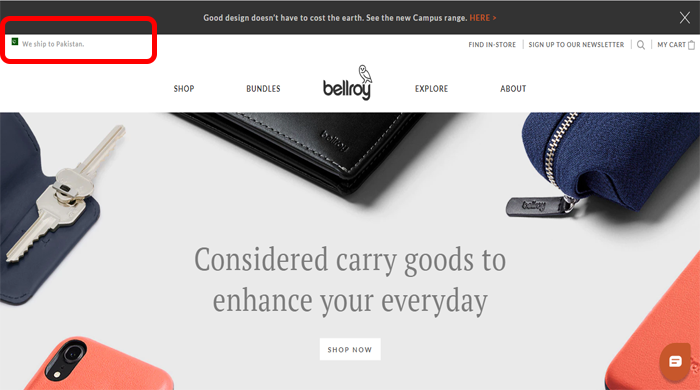
This makes me want to stay on the website and at least look at the products. Who knows, someday I might get a car, and I would need a key case. The fact that they know where I am from instantly gets my attention and increases my trust in Bellroy. 😄
Who doesn't know the e-commerce giant AliExpress? They're the biggest online retailer in Asia, owned by Alibaba. It's the biggest B2C platform in the world with buyers in over 220 countries.
Being such a giant, AliExpress uses geo IP. A platform that delivers internationally needs to know where the visitors are coming from. On the front page of the website, you can see in the header your country location for shipping purposes.
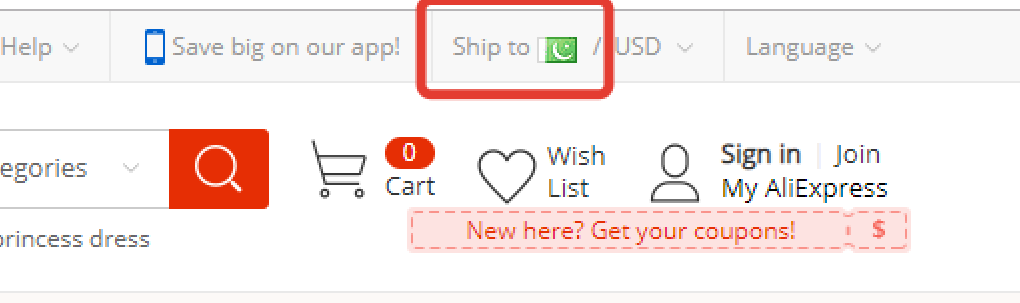
In this case, I can see that the website has detected my location i.e., Pakistan.
But I must say, it needs to expand the usage of IP geolocation to currency too. That would make for an even better user experience.
ASOS is a British-based fashion brand catering to young adults. They have a very colorful and lively website, and they have cleverly used IP geolocation to appeal to their visitors. The website is language-optimized for different regions. This is a peek at their website for Sweden. Swedish text and a small flag show that the site recognizes visitors from Sweden.
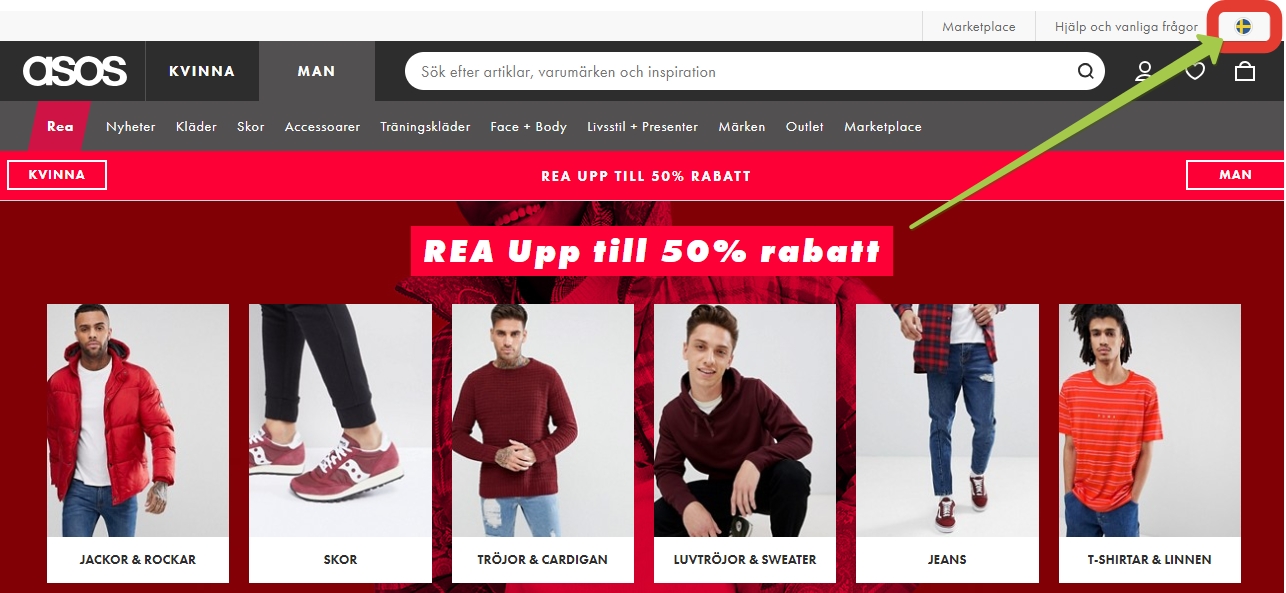
Translating your website is one of the best ways to personalize content for your visitors. Only 25% of the internet users in the world speak English. So, if you're not targeting the rest of the 75%, then you can't compete with those who are.
Shopbop is another great example of smart usage of IP geolocation. The visitor's location is instantly recognized, and he sees the website in his local language with prices in local currencies.

This is what a Chinese buyer would see when he visits the website:

A personalized website makes for a pleasant effect on your buyer. It gives your brand that "local" feel which makes people relate to you. Your brand will get stuck in the minds of your buyers. And they won't hesitate before coming back to you again.
This is the magic you can do with your own geo IP. It takes your personalization to the next level without being too intrusive.
We connect more with people who speak our language. That's just normal psychology for any human. So, why don't we let our websites speak to our buyers in their own language? Especially if it's an international brand speaking your language, you will be more eager to hear what they have to say. IP geolocation will help your visitors stay and come back, definitely.
On the technical front, if you have a multilingual website, you will be more visible to search engines by using a tactic called multilingual SEO. You can enter bigger markets by translating your website into more than one language.
Website personalization shows that you wish to be more in touch with your buyers. An IP geolocation API gives you just that without compromising your visitors' privacy. A personal touch without being personal.
Using geoIP will open new doors of opportunity for you to get a chunk of the bigger pie. So, let's tap into a market made up of half the world's population!